What are the differences between these water cup materials: PP, PC, Tritan and PETG?
When buying a water bottle, many people first check not the capacity or shape, but the material marked on the cup. Terms such as PP, PC, Tritan and PETG are commonly seen on plastic water bottles, sports jugs, children’s cups and portable tumblers. Though seemingly all suitable for holding water and can be made transparent or translucent, these materials have distinct properties. When selecting material for a water bottle, it is not enough merely to confirm if it is food-grade. You also need to consider heat resistance, clarity, drop resistance, odor performance, cleaning methods and actual operating temperature range.
Conclusion first: PP is lightweight, affordable, heat-resistant and practical for daily use. PC offers good transparency, impact resistance and heat resistance, but watch out for compliance and BPA issues. Tritan is transparent, shatter-resistant and low-odor. PETG is highly transparent and easy to process, but generally cannot withstand high temperatures. No single best water bottle material exists. Your usage scenario is the deciding factor.
1. PP: Simple yet Highly Practical
PP, or polypropylene, is a widely used plastic suitable for food contact. It can be found in many food containers, fresh-keeping boxes, parts of sippy cups, lids and inner stoppers.
Its characteristics are straightforward: lightweight, low cost and relatively good heat resistance, making it highly practical for daily use.
Advantages: Lightweight, heat-resistant, affordable and shatter-resistant.
Disadvantages: It generally cannot match PC, Tritan or PETG in transparency and texture. Scratches, hazing and aging may occur after long-term use.
If you simply want a durable, lightweight cup that holds hot water for daily use, PP is usually a reliable option. However, if you pursue glass-like clarity, PP is generally not the best choice.
2. PC: Clear & Shatter-resistant, Yet the Most Controversial
PC, or polycarbonate, was widely used in transparent water cups, space cups and sports water bottles in the past. It boasts high transparency, excellent impact resistance and decent heat resistance, seemingly ideal for manufacturing water bottles.
Nevertheless, PC material has sparked extensive discussions due to its connection with bisphenol A (BPA). Not all PC products are problematic, nor can we simply conclude that PC should not be used. However, for food-contact applications, extra attention must be paid to verify whether the products comply with relevant regulations and testing standards.
When considering PC water bottles, do not only look at the material name. More importantly, check the operating temperature, target user groups, test certification marks and manufacturer’s instructions. For infant products, applications involving prolonged contact with hot water or frequent high-temperature cleaning, many brands tend to select alternative materials. PC delivers solid performance, yet its application limits must be clearly understood.
3. Tritan: Transparent and Shatter-resistant, a Widely Used Body Material for Cups in Recent Years
Tritan is a copolyester commonly used for sports water bottles, children’s cups, sippy cups and portable tumblers. Many merchants highlight its advantages: transparency, shatter resistance and BPA-free composition.
It offers well-balanced performance: excellent transparency, decent impact resistance, and generally good odor resistance. Visually, it delivers a clearer look than standard PP.
Suitable for: sports bottles, children’s cups, cold-water tumblers and daily portable cups.
Notes: It cannot withstand unrestricted high-temperature exposure. Always refer to product specifications regarding high-temperature sterilization, dishwasher cleaning and prolonged soaking in boiling water.
Tritan enjoys high market acceptance largely because it strikes a favorable balance among clarity, shatter resistance and safety assurance.
4. PETG: High Clarity & Easy Processing, Not Suitable for Hot Water by Default
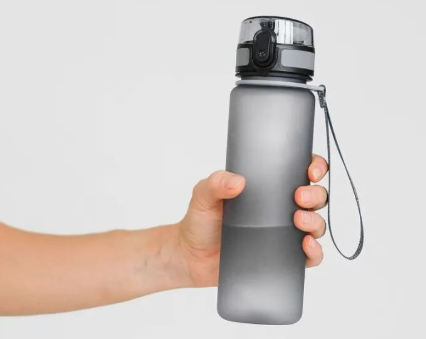
PETG is also a copolyester. It features outstanding clarity, easy processability, and greater toughness than some brittle transparent plastics. It is widely used for transparent boxes, display parts, packaging, certain cup bodies and blister products.
When applied to water bottles, the most critical point about PETG is its thermal limit. It can achieve an attractive transparent appearance, yet it should generally not be regarded as a material suitable for long-term storage of boiling water. If the product is clearly marked only for cold or room-temperature beverages, do not fill it with hot tea or hot coffee, and avoid arbitrary high-temperature sterilization.
5. When comparing the four materials side by side, their differences become clear.
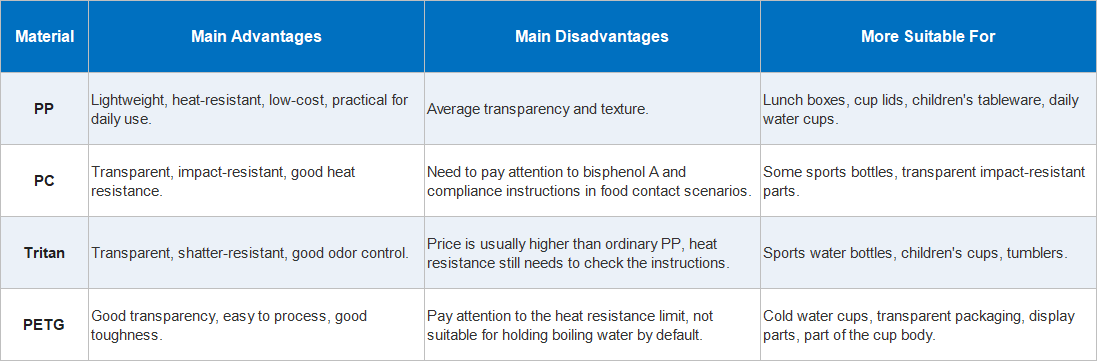
6. When choosing a water bottle, do not only focus on the cup body.
A water bottle consists of more than just the cup body. The lid, straw, sealing gasket, handle, coating and printed graphics also affect the user experience. In some cases, the cup body material meets requirements, yet poor experience still arises due to sealing gaskets prone to dirt buildup, heat-sensitive lids, odorous straws or easily worn printed layers. Therefore, when checking materials of a water bottle, you need to evaluate the cup body material together with the overall design, craftsmanship and usage instructions of the entire bottle.
7. How to quickly decide which one to choose?
Choose PP if you want an affordable, practical bottle for hot water. Make sure to check the heat resistance range marked on the product.
Go for Tritan if you prefer transparent, shatter-resistant bottles for daily carry.
For PC water bottles: Focus on compliance with food-contact requirements, applicable temperature and target user instructions.
For PETG water bottles: Best suited for cold or room-temperature beverages. Do not assume it can hold boiling water for long periods.
Extra caution is advised for children’s use, prolonged hot water storage and frequent high-temperature cleaning. Do not rely merely on marketing claims. Always check product specifications, applicable standards and test reports.
Final Summary: PP, PC, Tritan and PETG are all materials used for water bottles, yet each serves different purposes.
Remember this simple rule: PP for practicality, PC for compliance, Tritan for balanced performance, PETG for transparent applications with cold/ambient drinks.
When purchasing a water bottle, do not be intimidated merely by material names. What truly matters is whether the material fits your intended service temperature, beverage types and cleaning methods.
Source: WeChat Official Account