Why do some plastics last a long time, yet others rapidly age and crack, despite all being plastic materials?(2)
In this article, we continue to discuss why some plastics are durable while others age and crack rapidly.
III. Why Can Materials Labeled PP and ABS Vary Widely in Quality?
Many product specifications only state "PP material", "ABS material" or "PC material". However, this merely indicates the general material category and tells nothing about material quality.
When it comes to PP, options include homopolymer PP, copolymer PP, transparent PP, impact-modified PP, weather-resistant PP, flame-retardant PP, glass-fiber reinforced PP, and food-contact grade PP.
For ABS, there are general-purpose ABS, high-impact ABS, heat-resistant ABS, flame-retardant ABS, plating-grade ABS and weather-resistant ABS.
As for PC, grades cover general transparent grade, flame-retardant grade, UV-resistant grade, optical grade, reinforced grade, and chemically resistant modified grade.
Differences in material grades, formulations and additives lead to substantial variations in final performance.
Further factors affecting quality include:
Whether virgin material is adopted
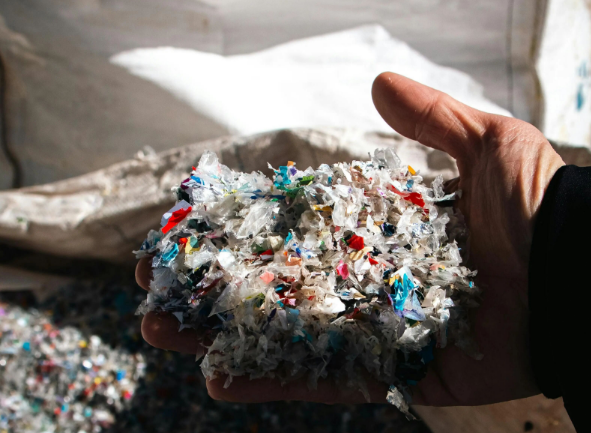
Whether regrind material is blended
The proportion of regrind material used
Whether antioxidants, light stabilizers, flame retardants and tougheners are added
Whether glass fiber reinforcement, mineral filling or alloy modification is applied
Whether injection molding temperature and drying conditions are appropriate
Whether mold design and cooling are stable
Whether the product structure is reasonable
Therefore, even if two products are both marked as "ABS housing", their actual durability can be entirely different.
Consumers only see the same abbreviated material name, while manufacturers actually control the grade, formulation, processing technology and quality system.
IV. Harder Plastics Do Not Equal Higher Durability
Many people judge plastic quality by hand feel. They consider plastics to be high-grade if they feel hard, and cheap if they feel soft. This judgment is not necessarily reliable. A material’s "hardness" and its "durability" are two different concepts.
Some materials feature high hardness yet poor impact toughness, and are prone to cracking upon impact. Other relatively soft materials deliver better wear resistance, bending resistance and impact resistance.
For phone cases as an example: PC tends to be harder and more transparent; TPU is softer and more resistant to repeated bending but susceptible to yellowing; silicone offers a soft touch yet easily attracts dust, accompanied by drawbacks in tear strength and stain resistance.
Every material has its own strengths and weaknesses. Proper material selection is not about maximizing a single property, but identifying the biggest potential risks the product will face.
If the product is likely to be dropped, priority should be given to impact toughness.
If the product will be used outdoors long-term, weather resistance matters most.
If the product is positioned near heat sources, long-term heat resistance needs to be considered.
If the product comes into contact with oil, alcohol or cleaning agents, chemical resistance is critical.
If the product undergoes repeated bending, fatigue resistance and flex resistance should be evaluated.
The definition of "durability" varies across different application scenarios.
V. Several Typical Real-life Cases
1. Why do phone cases turn yellow?
Many transparent or light-colored soft phone cases yellow over time. This phenomenon is usually related to factors including the material itself, ultraviolet radiation, oxidation, sweat and grease, heat, and additive migration. Not all yellowing indicates safety issues with the material, yet it signals that the material's appearance stability has deteriorated. To achieve long-term resistance to yellowing, consideration must be given to the material system, anti-oxidation performance, UV resistance, surface treatment, or simply opting for dark or opaque designs.
2. Why do plastic chairs turn brittle after prolonged sun exposure?
Many outdoor plastic chairs, plastic buckets and turnover boxes become brittle after long-term exposure to sunlight. This is generally associated with UV aging, thermo-oxidative aging, material grade and anti-aging additives.
Good performance for indoor use does not guarantee suitability for outdoor applications. When selecting outdoor products, cost alone should not be the only consideration; it is also necessary to check whether the material incorporates weather-resistant design.
3. Why do cable sheaths harden and crack?
Common materials for wire and cable sheaths include PVC, rubber, TPE, TPU, silicone rubber and so on. Different materials vary greatly in flexibility, heat resistance, low-temperature resistance, oil resistance, flame retardancy and weather resistance. Hardening and cracking of some cables after long service life may be caused by plasticizer migration, thermal aging, UV aging, repeated bending and low-temperature embrittlement. Such issues cannot be judged merely by sheath thickness; the material system and service environment also need to be taken into consideration.
4. Why do transparent plastic parts crack unexpectedly?
Common materials for transparent plastic parts include PC, PMMA, PS, PET and others. Transparency does not equal identical performance. Some transparent parts feature good impact resistance, some have favorable surface hardness, some offer excellent weather resistance, while others possess mediocre chemical resistance. If transparent plastic parts bear sustained stress and are simultaneously exposed to alcohol, cleaning agents or certain solvents, tiny cracks may emerge. This explains why components that look nearly identical and are both transparent can perform drastically differently in practical use.
VI. How to Determine Whether a Plastic Component Is Suitable for a Specific Application Scenario
Start by asking several key questions.
First, will it be used indoors or outdoors? For outdoor applications, priority must be given to ultraviolet radiation, temperature fluctuations, rain, humid heat and weather resistance.
Second, will it be exposed to high temperatures? This covers not only short-term high heat but also continuous service temperature over long periods.
Third, will it sustain long-term stress? If subjected to permanent load, latch stress, screw fastening or repeated bending, creep, fatigue and stress cracking need to be taken into account.
Fourth, will it come into contact with chemicals? Oils, alcohol, cleaning agents, solvents, acids, alkalis and sweat may affect certain plastics.
Fifth, are there any appearance requirements? Transparent, white and light-colored materials are more prone to visible issues such as yellowing, scratches, stress marks and discoloration.
Sixth, what is the required service life? Disposable packaging, short-life consumer goods, automotive components, outdoor equipment and medical devices demand completely different grades of materials.
Clear answers to these questions lay the foundation for proper plastic material selection.
VII. In Conclusion
Plastics are not synonymous with cheapness and low quality. The actual plastic material system is highly complex. Plastics can be low-cost or high-performance. They can be made into disposable articles as well as engineering components. They may age rapidly, or remain stable for long-term service with proper design.
Whether a plastic is durable depends not merely on the fact that it is plastic, but on the following aspects:
Whether the material type is properly selected;
Whether the grade and formulation are well-matched;
Whether the processing technology is stable;
Whether the product structure is reasonable;
Whether the service environment exceeds the material’s operating limits.
Therefore, when we see a plastic part cracking, yellowing, turning brittle or becoming sticky, do not hastily conclude that “the plastic is of poor quality”. A more precise set of questions should be:
What type of plastic is used?
Was it originally suitable for this application scenario?
Is its failure caused by material issues, processing defects, structural flaws, or environmental conditions?
Understanding these questions marks the true beginning of mastering material knowledge.