Why do some plastics last a long time, yet others rapidly age and crack, despite all being plastic materials?(1)
Why do some plastics last a long time, yet others rapidly age and crack, despite all being plastic materials?
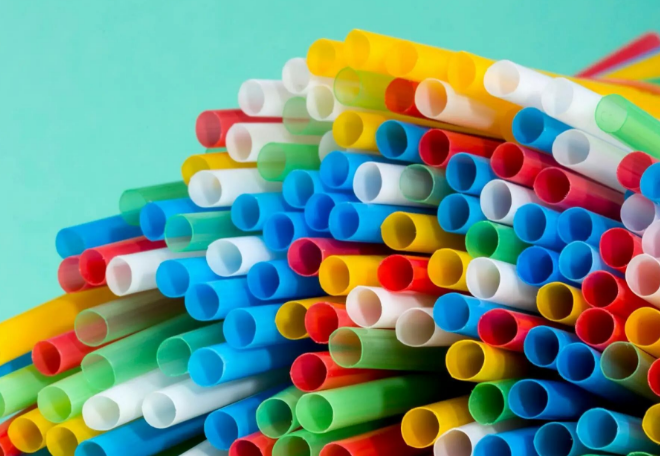
Plastic is arguably one of the materials we come into contact with every day. Mineral water bottles, takeaway food containers, phone cases, socket housings, cable sheaths, automotive interiors, home appliance casings, seals, pipes and packaging films — plastics can be found almost everywhere. Yet many people do not have a very favourable impression of plastic.
When it comes to plastics, common opinions go like this: cheap, flimsy, prone to becoming brittle over time, and susceptible to aging under sunlight. Some even turn yellow, get sticky and emit odd odors.
These phenomena do exist. However, it would be an oversimplification to conclude that “all plastics lack durability”. Plastic is not a single material, but a broad family of materials. The differences between various plastics are far greater than many people realize. Though all are referred to as plastics, some are made for single-use packaging, some for automotive components, some for gears and bearings, some for medical devices, and others can even operate long-term in environments featuring high temperatures, heavy corrosion, and requirements for electrical insulation.
Therefore, the real question is not whether plastic is durable, but rather:
What type of plastic is being used?
Has it been modified with additives?
Is the manufacturing process appropriate?
Does the operating environment exceed the material’s performance limits?
In this article, we will start with this question: Why are some plastics highly durable, while others age and crack rapidly?
I. Plastic is not a single material, but an entire family of materials.
In daily life, we tend to refer to many items simply as "plastic". In materials science, however, plastics cover a wide range of distinct types.
PE (Polyethylene): commonly used for films, bottle caps, pipes and packaging materials.
PP (Polypropylene): widely applied in food containers, home appliance components, automotive parts and daily necessities.
PVC (Polyvinyl Chloride): typically used for pipes, cable sheaths, flooring and profiles.
ABS: used for home appliance housings, toys and automotive interior parts.
PC (Polycarbonate): features excellent transparency and high impact resistance, suitable for transparent components and protective parts.
PA (Polyamide, also known as Nylon): boasts good strength and wear resistance, frequently used for gears, bearings and mechanical components.
POM (Polyoxymethylene): offers high rigidity and wear resistance, ideal for precision transmission parts.
TPU (Thermoplastic Polyurethane Elastomer): flexible and abrasion-resistant, widely adopted for phone cases, footwear materials, cables and flexible hoses.
All of these materials are commonly referred to as "plastic" by the general public, yet their properties vary drastically. Some are soft while others are rigid. Some withstand low temperatures, and others tolerate high temperatures. Some are transparent, and others opaque. Some are oil-resistant, whereas others are vulnerable to solvents. Some are suitable for indoor use, and others can serve outdoors for extended periods.
Therefore, when judging whether a plastic component is reliable, the first step is not to check if it is made of plastic, but to identify exactly which type of plastic it is and the application scenario it will be used in.
II. Why Do Plastics Age?
Plastic aging essentially refers to changes occurring in the material structure during service. These changes can be triggered by light, heat, oxygen, moisture, chemicals, mechanical stress, and may also stem from processing conditions and formulation design. After aging, plastics may exhibit the following phenomena: embrittlement and cracking, yellowing, chalking, stickiness, hardening, softening, loss of strength, surface dulling and dimensional deformation. The root causes behind these symptoms are not identical.
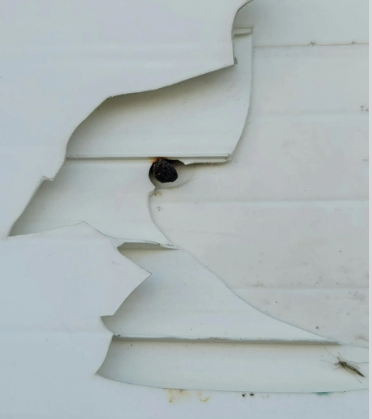
1. Sunlight and UV radiation causes embrittlement in plastics
Many outdoor plastic parts are vulnerable to prolonged sunlight exposure. Ultraviolet radiation in sunlight accelerates photo-oxidation reactions in certain polymer materials, triggering molecular chain scission and structural changes. Visible manifestations include fading, yellowing, surface chalking and reduced strength, eventually leading to embrittlement and cracking.
This explains why plastic buckets, plastic chairs and outer sheaths of outdoor cables can function well indoors for years, yet turn noticeably brittle after a period of outdoor exposure.
For outdoor applications, factors such as weather resistance grade, anti-UV system, carbon black, light stabilizers, antioxidants or surface coatings generally need to be considered. Not all plastics are inherently suitable for long-term outdoor service.
2. High temperatures accelerate oxidation and performance degradation
Plastics are sensitive to temperature. Some plastics exhibit excellent performance at room temperature, but thermo-oxidative aging will occur under prolonged high-temperature conditions. For instance, areas close to engines, heating vents, heat-generating parts of electrical appliances, and car interiors exposed to direct sunlight can reach temperatures far higher than typical indoor environments.
As the temperature rises, the aging rate of materials accelerates, and dimensional stability, strength and toughness may all deteriorate. Accordingly, the viability of a plastic component depends not only on whether it can withstand such temperatures briefly, but also on whether it can maintain its properties under these temperatures over the long term. This detail is frequently overlooked by many newcomers.
3. Stress concentration triggers premature cracking
Cracking in some plastic parts is not entirely caused by inferior base material, but hidden risks originating from structural design and processing. Examples include:
excessive sharp corners,
abrupt wall thickness transitions,
improperly designed screw bosses,
latches under sustained load,
high residual injection molding internal stress,
forced compression during assembly,
long-term bending or vibration.
Stress concentration forms at these locations. No defects may be visible right after production, yet cracks will initiate and propagate from these weak zones after a period of service.
Therefore, cracking of plastic components cannot always be simply attributed to "poor material quality". It may be the combined result of material selection, structure, mold design, injection molding and assembly processes.
4. Exposure to chemicals can also cause cracking
Many people assume plastics are resistant to water and corrosion. This is only partially true. Different plastics vary widely in their chemical resistance. Some materials are susceptible to alcohol, some to oils, some to cleaning agents, some to solvents, and others to acids and alkalis. Certain plastics are vulnerable when exposed to stress and chemicals simultaneously.
For example, a transparent plastic component may appear sturdy under normal conditions. However, prolonged contact with alcohol, cleaners, grease or certain solvents, combined with internal stress, can trigger tiny cracks. This phenomenon is commonly known as environmental stress cracking. It is characterized by cracks developing gradually under service conditions without significant external impact.
Therefore, when evaluating the durability of plastics, we cannot merely consider mechanical strength; we also need to take the contacting media into account.
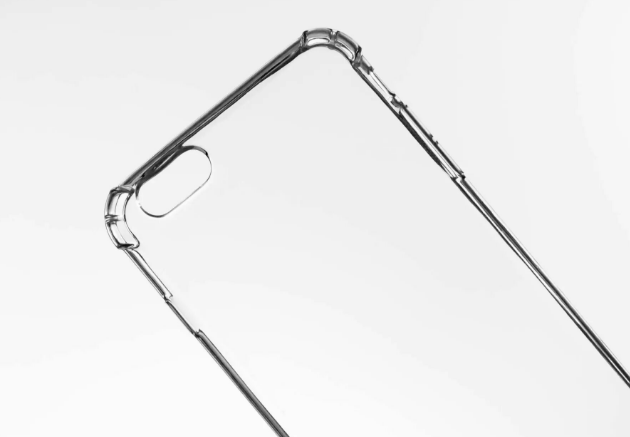
5. Water and humid heat can also affect certain plastics
Some plastics are sensitive to water and humid heat. For example, nylon readily absorbs moisture, which may cause changes in its dimensions, strength, rigidity and electrical properties. Materials such as polyester and polycarbonate are also at risk of hydrolysis under high temperature and high humidity or inappropriate processing conditions.
This does not mean these materials are poor-quality; rather, they have their own service limits. During material selection, it is essential to clarify whether the component will come into contact with water, whether it will be used long-term in high-humidity environments, whether dimensional stability is required, and if electrical insulation performance is involved. For the same type of material, the outcome can be completely different when used in dry indoor environments versus hot and humid outdoor conditions.