Panorama of the Chemical Recycling Industry: Six Challenges to Be Addressed Amid the Industry Boom
In recent years, the chemical recycling sector for plastics has gained growing momentum. As a critical solution to address the degradation issue plaguing mechanical recycling and enable the infinite circular reuse of plastics, chemical recycling technologies are being rapidly upgraded with numerous projects fast-tracked for implementation, emerging as the most high-profile focus within the plastics circular economy industry.
While the industry is thriving, diverse viewpoints and practical challenges have gradually emerged. These discussions are not meant to deny the value of this sector; instead, they represent the inevitable growing pains as the industry evolves from conceptual pilot projects toward large-scale, commercialized and regularized operation.
Combining frontline industrial practices, market feedback and insights from industry exchanges, chemical recycling currently faces phased challenges and divergent research directions across multiple links including raw material supply, pretreatment, process equipment, downstream deep processing, capital investment, end-user applications and industrial awareness. This paper objectively sorts out existing problems, and meanwhile summarizes feasible solutions and exploration directions based on practical experience within the sector.
1. Front-end Raw Material Collection: The Dilemma of Balancing Supply Source, Quality and Cost
The raw material issues in chemical recycling need to be analyzed from three dimensions.
First of all, there are no unified standards, and requirements for waste materials vary drastically across different technical routes. Some enterprises claim they can process a wide range of low-value complex waste materials, while others impose strict restrictions on the purity and categories of raw materials. Nevertheless, the underlying consensus across the industry is that the impurity content and source of raw materials directly determine the quality of pyrolysis oil. In other words, specific types of raw materials match corresponding processes. At present, players in the industry are still exploring independently, and no consensus has been reached yet. The first decision enterprises have to make concerns what kind of raw materials to adopt, what grade of oil to produce, and which technical route to choose.
Secondly, the stability of supply volume. Chemical recycling projects often boast an annual production capacity ranging from tens of thousands to even hundreds of thousands of tonnes, which requires long-term, stable and large-scale raw material supply. Taking waste plastics from paper mills and pre-incineration waste as examples, although such materials are centrally collected by environmental sanitation and recycling enterprises, their output is subject to fluctuations caused by regional industrial structures, seasonal factors and waste collection and transportation systems. Whether these feedstocks can sustain the continuous operation of a project for more than a decade poses an even greater challenge than the quality of a single batch of raw materials. Some enterprises have considered the recycling of aged landfill waste, yet such waste resources are now being fiercely competed for by many waste incineration plants.
Lastly, the rationality of raw material pricing. When the recycling price of raw materials falls below 200 yuan per tonne, some recyclers tend to send waste materials directly for incineration treatment, leaving enterprises trapped in a predicament where raw materials exist yet remain inaccessible. Behind the price game lies the fundamental issue that the entire recycling system has not yet been well-matched to meet the raw material demands of chemical recycling: there is a lack of standards for quality grading, mismatched collection and transportation networks, and unregulated benefit distribution mechanisms.
In summary, the challenges on the raw material side constitute a progressive dilemma: the technical process route defines raw material requirements, these requirements in turn drive the development of the supply system, and the stability and cost of the supply system conversely affect the economic viability of the project. Volume, quality and price must be addressed in an integrated manner, as tackling any single factor in isolation will not suffice.
2. Waste Pretreatment: Two Process Routes with Scenario-Based Selection as the Key
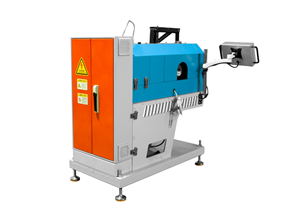
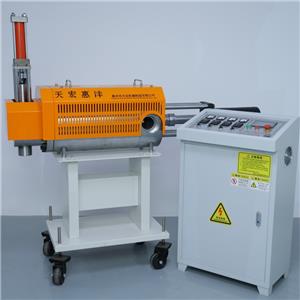
Two major pretreatment models have currently taken shape in the industry for recycled waste materials. The first involves only simple crushing and particle size control before direct feeding. This process features a short workflow and low overall costs, yet it imposes extremely high requirements on the adaptability of downstream pyrolysis equipment and processes. The second route subjects materials to intensive crushing, washing and even pre-granulation prior to pyrolysis, delivering better raw material quality but incurring extra expenditures on equipment, labor and energy consumption. Selecting the appropriate pretreatment process for different enterprises and types of raw materials has become a common dilemma in frontline operations.
3. Chemical Recycling Technologies for Polyolefins: Diverse Technical Routes with Purification and Hydrogenation Remaining as Bottlenecks
Nowadays, a wide array of technologies and equipment solutions for polyolefin pyrolysis and catalytic cracking have emerged at home and abroad, presenting a flourishing development landscape. While diverse technical routes offer more options for the market, they also leave new industry entrants confused when it comes to technology selection: which raw materials are compatible with different processes? What are the discrepancies in energy consumption, yield and operation and maintenance costs? How can small and medium-sized projects select the most suitable technical solution?
However, when it comes to converting pyrolysis products into high-value products, downstream purification and hydrogenation processes remain restrictive factors. At present, most pyrolysis products are mainly used as fuel oil with limited added value. To upgrade them into petrochemical feedstocks, deep purification and hydrotreating are mandatory.
The industry is currently highly fragmented in this regard. Large petrochemical enterprises boast mature hydrogenation and purification technologies, yet these are designed for mega-scale projects with an annual capacity of hundreds of thousands of tonnes, which fail to match the capacity of most existing chemical recycling facilities. Although small-scale hydrogenation equipment has been developed and launched in the market, there are only a few large-scale commercial application cases, and their actual operating performance still needs to be verified through more projects. Hence, downstream deep processing capacity has become the key bottleneck restricting the high-value development of recycled products.
4. Capital Side: Uneven Progress with Focus on Long-term Profitability
Capital from all sides is pouring into the chemical recycling sector. Some projects have completed construction and commenced operation to collect operational data and trial-produce products; others are in the pilot or lab-scale testing phase to verify process feasibility and cost efficiency. A number of projects have finished feasibility studies and obtained official approvals, poised to enter the construction phase shortly. Meanwhile, certain enterprises remain cautious and refrain from large-scale investment rollouts, holding the view that many technologies still require further optimization at this stage and widely proven stable profitability models for such projects have yet to be established across the industry.
Overall, the industry is not a binary choice between investing or not investing. Instead, all stakeholders select different entry timelines based on their own judgments. Everyone is moving deeper into the industry, albeit at different stages of progress.
5. Downstream Product Sector: Concerns Over Product Stability, Pricing and Supply Volume
As end users, downstream plastic product manufacturers still have concerns about chemically recycled products. They believe there is room for improvement in technical specifications, market pricing, continuous supply capacity and batch-to-batch stability, making large-scale replacement of virgin feedstocks difficult for the time being.
6. Diverse Industry Perspectives: External Discussions Triggered by Various Technical Routes
Looking at global industry public opinion and research fields, diverse viewpoints have emerged regarding the various technical routes for chemical recycling:
The industrial value of PET chemical recycling is widely recognized across the industry. Featuring a well-defined technical pathway that enables the reuse of monomers after depolymerization, multiple commercial production lines have already achieved stable operation.
Controversies mainly center on the polyolefin pyrolysis route. Some viewpoints question its economic efficiency and carbon footprint performance, arguing whether the energy consumption and costs of converting plastics into oil via pyrolysis followed by repolymerization can outperform the direct production of virgin feedstocks. Meanwhile, the stability of pyrolysis outputs has also drawn widespread attention. Significant compositional fluctuations across different batches of waste plastic feedstocks lead to inconsistent components and yields of pyrolysis oil, which in turn undermines the quality uniformity of downstream polymerized products.
These discussions are not meant to negate the industry, but to drive its progress. Every emerging industry will witness disputes over technical routes, standards and definitions on its path toward large-scale development. Faced with diverse voices, the industry chooses to prove its value through implemented projects, measured operational data and long-term operating results. We should face up to the advantages and disadvantages of different routes, avoid blind pursuit or one-sided denial, make rational arrangements based on raw material composition, regional markets and application scenarios, and allow each technical route to deliver its unique value.