What exactly are the differences between these common plastics: PE, PP, PVC, ABS and PC? (1)
Product descriptions frequently mention terms such as "PP material", "ABS casing", "transparent PC components", "PVC pipes" and "PE packaging films".
These abbreviations may seem familiar to most people.
Nevertheless, many people still confuse them when it comes to material selection, product purchasing, and troubleshooting analysis.
For example:
Both PE and PP can be used for food packaging. What are the differences between them?
Why is PVC widely used for water pipes and electrical wire insulation sheaths?
Why is ABS commonly adopted for home appliance casings and toys?
PC features high transparency and excellent impact resistance, yet why cannot it be applied universally?
If a plastic part is marked as "engineering plastic", does it necessarily mean superior quality?
These questions seem to be about plastic material designations, but essentially they boil down to application scenarios.
Though all are plastics, some are cheaper, some boast better heat resistance, some deliver superior impact resistance; some are ideal for transparent parts, some for flexible hoses, some for disposable packaging, and others for load-bearing components meant for long-term use.
Therefore, in this article, we will avoid intricate polymer structures and first clarify the characteristics of these most common plastics
PE, PP, PVC, ABS and PC.
We will elaborate on the following points respectively:
What are each of them comparable to in terms of properties?
What are their typical applications?
What are their advantages and drawbacks?
What problems will arise if the wrong material is selected?
Once you understand these materials, it will be much easier to analyze a wide range of daily and industrial products.
I. Don't rush to memorize the abbreviations; first get to know the inherent properties of each plastic material
Many beginners learning about plastics tend to start by memorizing the names.
PE stands for polyethylene.
PP stands for polypropylene.
PVC stands for polyvinyl chloride.
ABS stands for acrylonitrile-butadiene-styrene copolymer.
PC stands for polycarbonate.
These terms are certainly important.
Yet if you only memorize the nomenclature, you will soon mix them up.
A more practical approach is to first grasp the performance characteristics of each material.
PE is comparable to a material featuring great drop resistance, excellent low-temperature tolerance, good chemical resistance, ideal for packaging and pipes.
PP is lightweight, boasts superior heat resistance than PE at a low cost, and is widely used for daily necessities and food containers.
PVC can be formulated either rigid or flexible with decent flame retardancy, making it suitable for pipes, electrical cables and extruded profiles.
ABS serves as an ideal casing material that delivers attractive appearance, balanced rigidity and toughness, along with easy processing and surface finishing.
PC is a high-performance transparent material with clarity, outstanding impact strength and favourable heat resistance, yet it is more susceptible to processing conditions and ambient environments.
These are not strict technical definitions, merely designed to help you form an initial intuitive understanding.
When carrying out actual material selection, you still need to refer to specific grades, formulations, processing techniques and service conditions.
Nevertheless, with this general overview in mind, you will no longer simply categorize any item you see merely as "plastic".
II. PE: Extremely Common Yet Greatly Underestimated
PE, short for Polyethylene, is one of the most widely consumed plastics worldwide.
Countless everyday items are made from PE, including various packaging bags, plastic wrap, bottle caps, laundry detergent jugs, turnover boxes and plastic pipes.
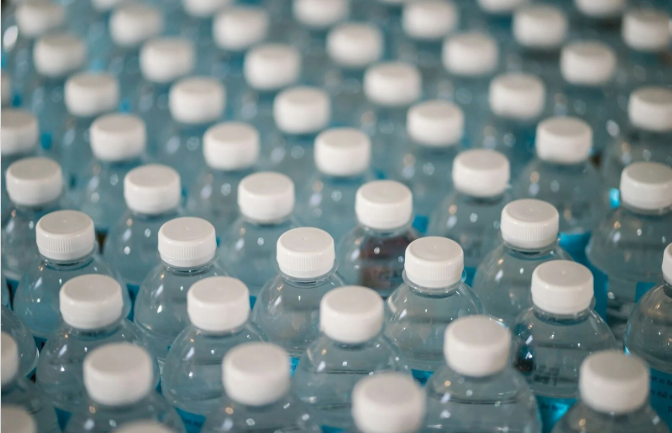
PE, short for Polyethylene, is one of the most widely consumed plastics worldwide.
Countless everyday items are made from PE, including various packaging bags, plastic wrap, bottle caps, laundry detergent jugs, turnover boxes and plastic pipes.
Ordinary people do not need to memorize all classifications, yet they can first understand several key differences:
Flexible grades of PE are generally adopted for manufacturing thin films, plastic bags and soft packaging.
PE varieties with higher rigidity are commonly used to produce bottles, buckets, pipes and sheets.
Ultra-high molecular weight polyethylene may be applied for special components requiring excellent wear resistance and impact resistance.
PE boasts highly practical advantages.
It performs well in aqueous environments and resists corrosion from common acids and alkalis.
Thanks to its favorable chemical resistance and affordable processing costs, PE is the preferred material for numerous liquid packaging containers, chemical drums and pipes.
Nevertheless, PE is not omnipotent.
It has low surface energy, which simply means its surface is hard to bond to.
Most adhesives, printing inks and coatings cannot adhere firmly to PE surfaces.
Therefore, surface treatments such as corona treatment, flame treatment, plasma treatment and primer coating are usually required for printing on PE films, bonding PE parts, and painting PE surfaces.
Another common drawback of PE is its mediocre heat resistance.
Many PE products tend to soften and deform under high-temperature conditions. Creep also needs to be taken into account when they bear sustained loads for a long time.
Therefore, PE is ideal for packaging, pipes, containers and applications demanding chemical resistance, yet it is not suitable for fabricating load-bearing components that operate at elevated temperatures.
When judging whether a product is suitable for PE material, focus on checking these points:
Does it need to withstand high temperatures?
Will it bear weight or pressure continuously for a long time?
Does it require bonding, printing or surface coating?
Will it be exposed to direct sunlight outdoors for prolonged periods?
If these service conditions are stringent, merely marking the product as "PE material" is far from sufficient